
Parallel trade can help improve access when medicines are unavailable in a destination country, but it can also raise concerns for manufacturers and healthcare systems when products move from markets with limited supply. Its effects therefore depend on the medicine, the markets involved and the availability of supply.
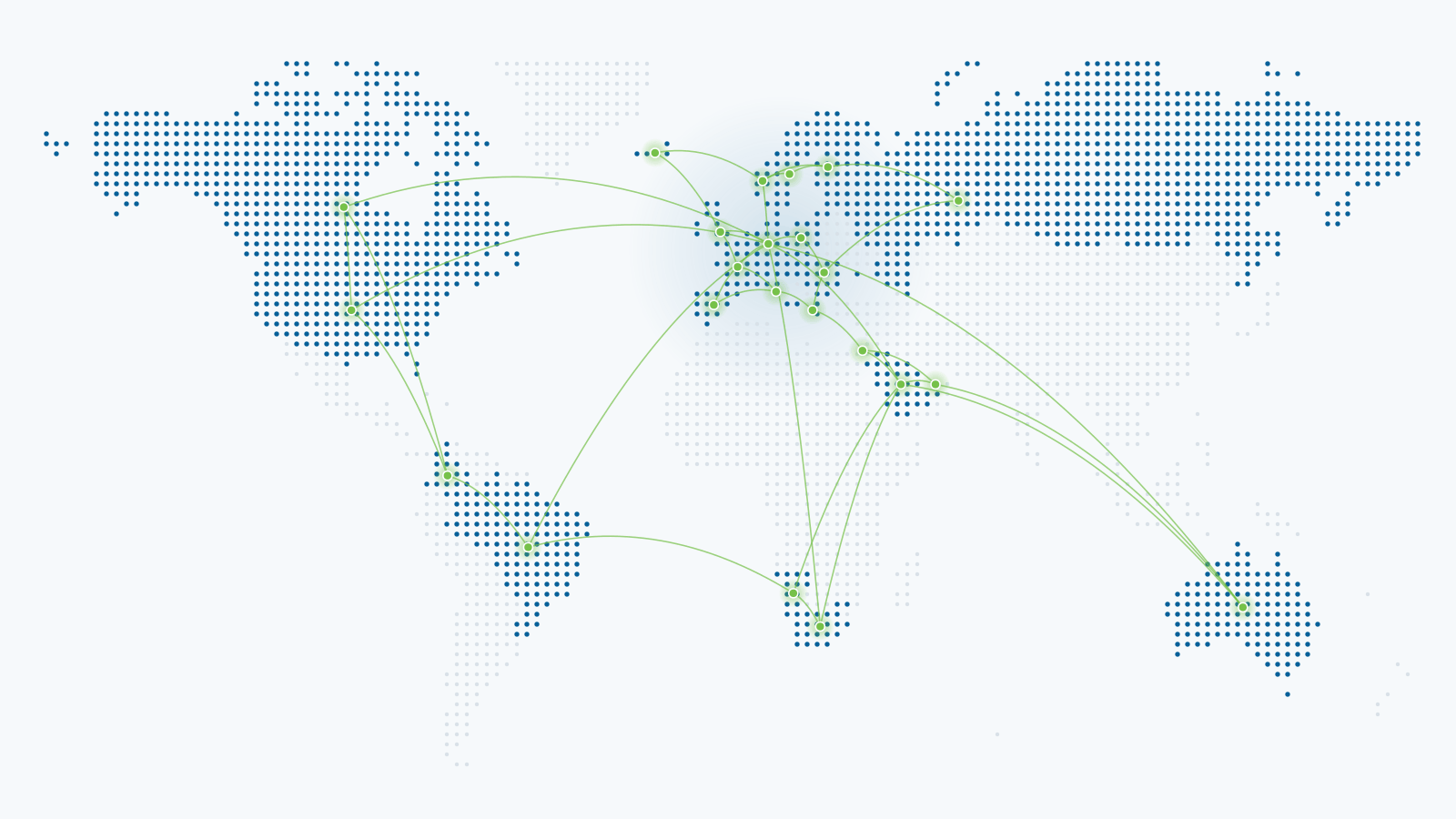
Parallel Trade in Europe: Opportunity or Supply Chain Challenge?
National governments remain responsible for many pricing and reimbursement decisions, while the EU single market enables the movement of goods between Member States, subject to regulatory and public-health requirements. This creates the economic conditions in which parallel trade can develop.
For pharmaceutical wholesalers and parallel importers, these differences can represent a commercial opportunity. For manufacturers, they can affect pricing strategy and international reference pricing. For healthcare systems, they can contribute to lower prices in importing markets—but can also become relevant when supply is tight.
The challenge is therefore not simply finding the cheapest country.
It is understanding where a price difference exists, whether it is commercially meaningful, whether the product is available, and whether the opportunity is likely to remain viable.
That requires more than a single price comparison. It requires a combination of current prices, historical trends, reimbursement information, available importer-related data, and shortage signals across markets.
What is parallel trade?
Parallel trade refers to the movement of a genuine medicinal product from one European country to another outside the manufacturer's or authorised distributor's established distribution network.
In the EU, parallel imports are generally a lawful form of trade based on the principle of free movement of goods. The European Commission has explicitly recognised that pharmaceutical parallel imports arise in part because Member States regulate and control medicine prices differently.
For centrally authorised medicines, the European Medicines Agency also operates a specific parallel-distribution notification system. EMA describes parallel distribution as the distribution of a centrally authorised medicinal product from one Member State to another by a company independent of the marketing-authorisation holder. Its public register contains current parallel-distribution notices, and EMA states that it issues approximately 2,500 such notices each year.
The basic commercial logic is relatively simple:
Lower-price market → purchase → parallel distribution → higher-price market
The difference between the two markets can create room to cover transportation, handling, repackaging, regulatory and distribution costs while potentially leaving a margin for the intermediary.
But the price difference itself is only the starting point.
A product that is €200 cheaper in one country is not necessarily a viable parallel-trade opportunity if the lower-price market has limited availability, if distribution costs eliminate the margin, or if regulatory requirements make the transaction impractical.
This is why parallel trade is fundamentally a data and timing problem as much as a pricing problem.
Why do medicine prices differ across Europe?
The same medicine can have substantially different prices across European markets because pharmaceutical pricing is largely shaped at national level.
The European Commission notes that Member States retain responsibility for organising their healthcare systems and for many pricing and reimbursement decisions. Countries use different combinations of pricing regulation, reimbursement policies, procurement mechanisms and external reference pricing.
Several factors can contribute to cross-country price differences.
External reference pricing
External reference pricing (ERP) uses medicine prices in other countries as a reference when setting or negotiating prices domestically.
This creates an inherently interconnected European pricing environment: a price decision in one market can influence decisions elsewhere if that country is included in another country's reference basket.
The European Commission has noted that ERP can contribute to price convergence and that low prices in one country may have implications for pricing strategies in other markets and potentially for parallel trade.
Some countries also have legal measures designed to protect medicine availability, including restrictions on exports of specific medicines when supply is limited. The rules and conditions vary by country and product, so a price difference alone does not establish that an export is permitted.
National reimbursement policies
A medicine's commercial price is only one part of the picture.
National authorities determine how medicines are reimbursed, what reference prices are used, and how much patients or public payers ultimately pay. The European Commission notes that even countries where manufacturers can initially set prices freely can exert significant indirect price control through reimbursement decisions.
This means that two countries can have similar published prices but very different reimbursement environments—and therefore very different commercial conditions.
Confidential discounts and purchasing agreements
Published prices do not necessarily represent the actual price paid by a purchaser.
Discount agreements, rebates and procurement contracts can create a substantial difference between the publicly visible price and the effective transaction price. This is particularly important in markets where hospital procurement or tenders play a major role.
For a parallel trader, however, the relevant question is not simply:
Which country has the lowest published price?
It is:
At what price can the product actually be sourced, and what price can it realistically achieve in the destination market?
Distribution margins
The journey from manufacturer to patient adds another layer of variation.
Medicine prices can include the manufacturer's price, wholesale and retail margins, and taxes such as VAT. OECD and WHO methodologies both distinguish these components because they can vary substantially between markets.
Research comparing European markets has also found significant differences in distribution margins between countries.
This matters when assessing parallel-trade economics because the difference between two retail prices is not necessarily the same as the difference between the prices available to a wholesaler.
Taxes
VAT and other taxes can also contribute to differences in the final price of a medicine.
The impact varies by country and by whether the comparison is made at ex-factory, wholesale, reimbursed or retail level. For this reason, comparing like with like is essential when analysing international price differences.
Exchange rates
Currency movements add another source of volatility when countries outside the euro area are included in a pricing comparison.
The European Commission has specifically highlighted currency conversion as a factor that can affect external reference pricing and cross-country price comparisons.
A price difference that looks commercially attractive today can therefore change even if the local medicine price remains unchanged.
Periodic price revisions
Finally, medicine prices do not remain static.
National price cuts, reimbursement revisions, reference-price changes, new competitors, tender outcomes and regulatory decisions can all change the economics of a potential parallel-trade route.
This is why a country comparison based on today's prices can become outdated quickly.
Why distributors monitor price differences every day
For wholesalers and parallel importers, the commercial question is rarely whether price differences exist. They clearly do.
The more important question is which differences are actionable.
A structured monitoring process can help distributors:
Identify potential arbitrage opportunities
A significant difference between two markets can indicate an opportunity to source a medicine in a lower-price country and distribute it into a higher-price market.
But the opportunity needs to be evaluated against logistics, regulatory requirements, available stock and competitive conditions. Importer-related information may be available for some markets, but it should not be taken as a complete picture of all importers operating in a country.
Identify disappearing margins
Price differences can narrow quickly.
A price reduction in the destination market can eliminate a previously attractive margin, while a price increase in the source market can have the same effect from the opposite direction.
Historical data is therefore important. It can show whether a price gap is stable or whether it has been closing for months.
Anticipate imports and competitive pressure
Information about parallel-import activity, where available, can provide one indication of market conditions. However, the presence or absence of importer data does not necessarily reflect the full number of importers active in a country.
Where reliable information indicates that several wholesalers are importing the same product, the opportunity may be more competitive than a simple country-price comparison suggests.
Conversely, a high-price product with limited recorded import activity may deserve further investigation, while recognising that available data may not capture every importer operating in the market.
Monitor export risks
The reverse problem is equally important.
A country experiencing a shortage may introduce restrictions or controls on exports of specific medicines. National authorities can also monitor whether exports are contributing to availability problems.
For example, Greece continues to use temporary export restrictions for certain medicines in response to availability concerns. A recent European Commission notification describes situations where increased export activity and shortages are considered when assessing whether restrictions are justified.
Evaluate purchasing decisions
Ultimately, the objective is not simply to collect prices.
It is to make better decisions about:
- what to buy,
- where to buy it,
- when to buy it,
- where it may be commercially viable,
- and when an opportunity has become too risky or too small to pursue.
Parallel trade and drug shortages: where the two intersect
Parallel trade is sometimes presented as a cause of medicine shortages. The evidence and regulatory position are more nuanced.
Medicine shortages can have many causes, including:
- manufacturing problems,
- quality issues,
- limited production capacity,
- sudden increases in demand,
- supply-chain disruptions,
- commercial decisions,
- or insufficient stock.
The EMA's guidance explicitly states that parallel trade or export is a legitimate business practice and that it is unlikely on its own to cause a shortage, although it can contribute to worsening the extent of a shortage in the source country when supply is already insufficient. This distinction is important.
The HMA also notes that there is no harmonised definition of medicine shortages across Europe and identifies several potential causes of unavailability, including interruptions in supply chains and, in some circumstances, parallel trade.
For distributors, this means that price and availability should not be analysed separately.
A product may look attractive because of a large cross-country price difference. But if the source country has an active shortage, the apparent opportunity may not be commercially or operationally viable.
The opposite can also be true.
A shortage in one country can create an unusually large price differential, making the market worth monitoring closely — if sourcing is lawful, supply is genuinely available, and all applicable regulatory requirements are satisfied.
The EMA's current guidance increasingly emphasises early shortage notification, supply-chain resilience, communication between stakeholders and fair and equitable distribution.
Ozempic illustrates the problem
The European experience with Ozempic is a useful example of why price data needs to be viewed alongside availability.
EMA first published information about an Ozempic supply shortage in October 2022. The shortage involved the 0.25 mg, 0.5 mg and 1 mg strengths and was associated with increased demand. EMA's 2024 recommendations for GLP-1 receptor agonists also identified increased demand together with manufacturing-capacity constraints as the main drivers of the shortages affecting Ozempic and other GLP-1 medicines.
The Ozempic shortage has since been resolved at EU level, with EMA's shortage page last updated in January 2026.
For a distributor analysing Ozempic, therefore, a price comparison without a shortage indicator would provide an incomplete picture.
The relevant question is not simply:
Where is Ozempic cheapest?
It is:
Where is Ozempic available, at what price, with what competitive landscape, and how has that situation changed over time?
From Price Differences to a Monitoring Workflow
Understanding where price differences exist is only the first step. For companies involved in parallel trade, the real challenge is turning this information into a continuous monitoring process. Prices, reimbursement conditions, shortages, importer activity and market conditions can change frequently, making it difficult to rely on occasional manual checks.
This is where tools such as Ex-PRICE can help bring international drug pricing data together and support a more structured approach to monitoring opportunities and risks across markets.
But identifying the right data is only part of the process, the next step is building a workflow that turns this data into actionable information — from selecting the countries and products to monitor, to comparing prices, tracking shortages, setting up alerts and regularly reviewing changes. In our next article, we will take a closer look at how to build such a workflow using Ex-PRICE and turn parallel trade monitoring into a more systematic, data-driven process.
Sources
- European Commission. Parallel imports of proprietary medicinal products, available at: https://eur-lex.europa.eu/EN/legal-content/summary/parallel-imports-of-proprietary-medicinal-products.html
- European Commission. Communication from the Commission on parallel imports of proprietary medicinal products for which marketing authorisations have already been granted, available at: https://eur-lex.europa.eu/legal-content/EN/TXT/?uri=CELEX:52003DC0839
- European Medicines Agency (EMA). Parallel distribution, available at: https://www.ema.europa.eu/en/human-regulatory-overview/post-authorisation/parallel-distribution
- European Commission. External reference pricing of medicinal products: Simulation-based considerations for cross-country coordination, available at: https://health.ec.europa.eu/system/files/2016-11/erp_reimbursement_medicinal_products_en_2.pdf
- European Commission. Cost-effective use of medicines, available at: https://health.ec.europa.eu/eu-health-policy/health-systems-coordination/cost-effective-use-medicines_en
- European Medicines Agency (EMA). Good practices for industry for the prevention of human medicinal product shortages, available at: https://www.ema.europa.eu/system/files/documents/regulatory-procedural-guideline/good_practices_for_industry_for_the_prevention_of_human_medicinal_product_shortages_en.pdf
- Heads of Medicines Agencies (HMA). Availability of Medicines, available at: https://www.hma.eu/human-medicines/availability-of-medicines.html
- European Medicines Agency (EMA). Ozempic – Supply shortage, available at: https://www.ema.europa.eu/en/medicines/human/shortages/ozempic
- Garattini L, Motterlini N, Cornago D. Prices and distribution margins of in-patent drugs in pharmacy: A comparison in seven European countries. Health Policy. 2008;85(3):305–313, available at: https://pubmed.ncbi.nlm.nih.gov/17928092/
- Ganslandt M, Maskus KE. Parallel imports and the pricing of pharmaceutical products: Evidence from the European Union. Journal of Health Economics. 2004;23(5):1035–1057, available at: https://pubmed.ncbi.nlm.nih.gov/15353192/


